Share
Luthier’s Bundle – Fretboard Radius Jig and Radius Sanding Blocks (Set of 5)
Save Your Hands. Save Your Hours.
Radius a fretboard in minutes. Not an afternoon.
Hand-sanding a radius takes 45–60 minutes.
With this jig, you’ll be done in under 10 — perfectly consistent every time.
"The quickest, easiest, and most accurate way to radius a fingerboard" - Beau Hannam
Couldn't load pickup availability
Proudly designed and made by a small team of builders in Virginia, USA
Ships in 2-3 Days
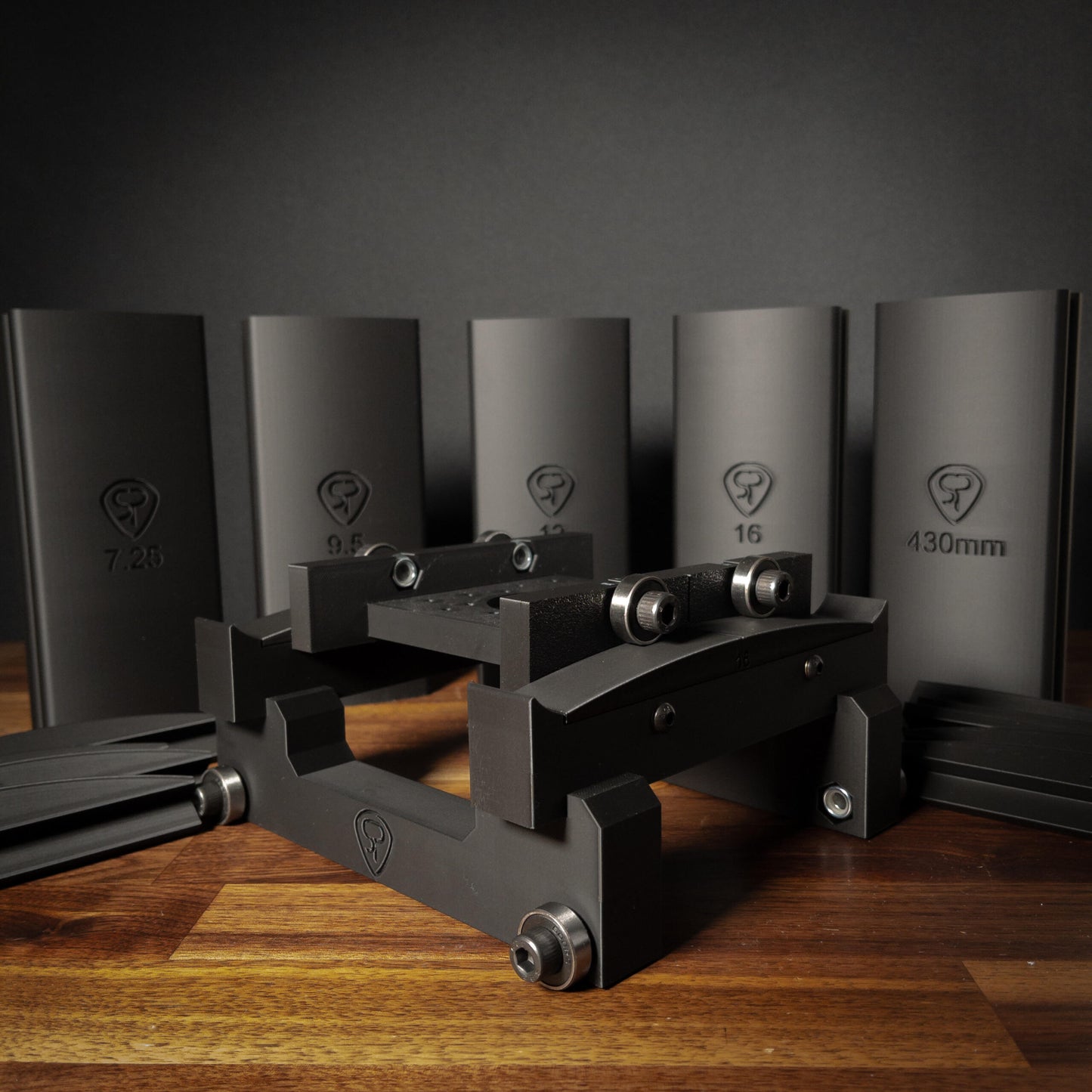
This all-in-one bundle includes five 2.75″ wide radius sanding blocks, our Fretboard Radius Jig, and five sets of 2 radius inserts—giving you everything you need to achieve perfect fretboard radii with ease and accuracy.
Bundle Includes:
- 1 Fretboard Radius Jig
- 5 Sets of 2 Radius Inserts
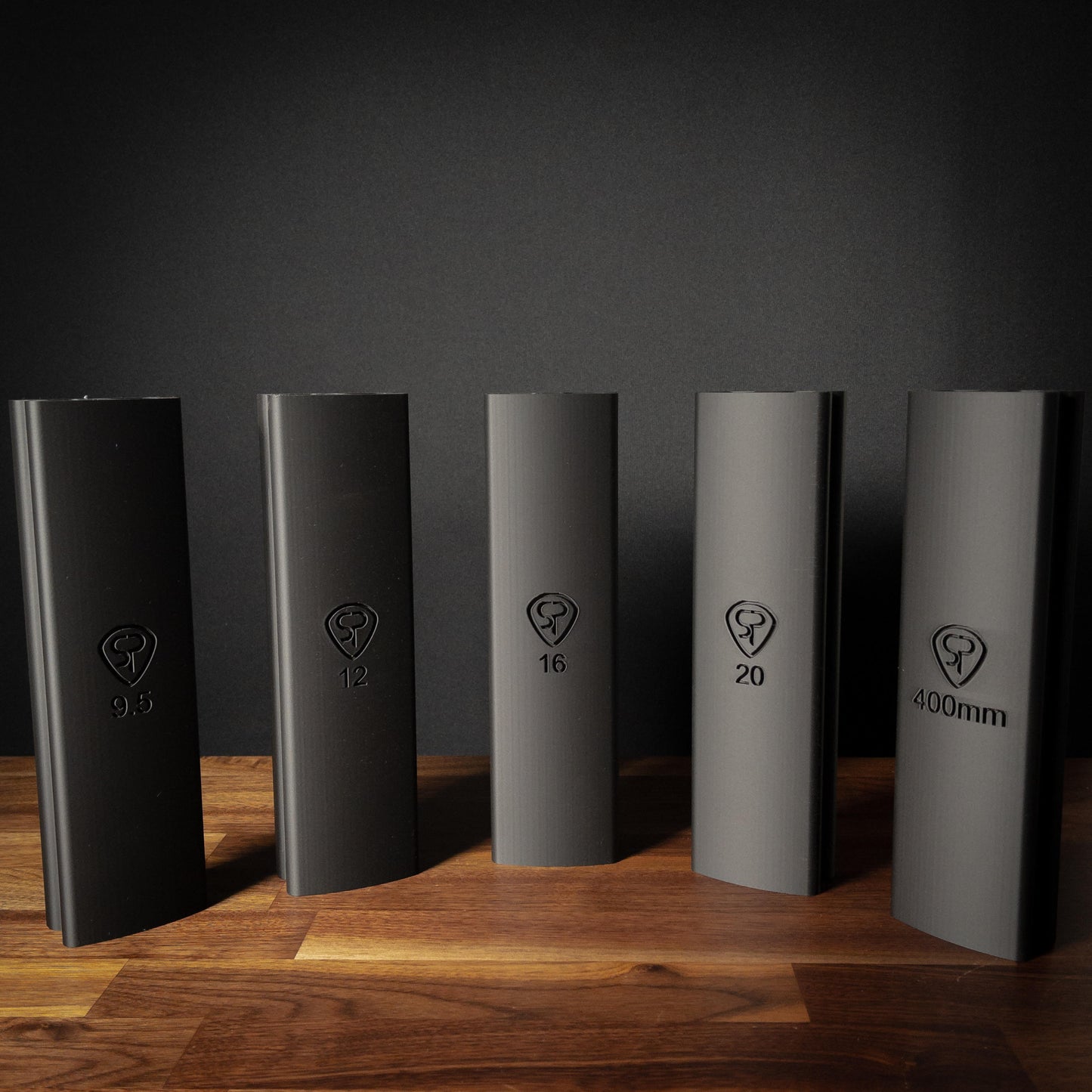
- 5 - 2.75″ wide Radius Sanding Blocks
Radius Sanding Block
Our radius sanding block was created to make the process of shaping and smoothing guitar fretboards, fingerboards, and frets efficient and precise.
Key Features:
- Length Options: Our sanding blocks are available in 4″, 8″, and 10″ long
- Variety of radius options: 7.25, 9.5, 10, 11, 12, 13, 14, 15, 16, 17, 18, 19, 20, 25, 26, 30
- Standard Width: 2.75" width for luthiers who don't plan on working on extended ranged guitars. Perfect for 2.75" wide Dura-Gold adhesive back sandpaper
- Metric Radii Available: We also offer popular metric radii such as 400mm and 430mm
- Custom Options Available: Contact us if you'd like a custom radius at no additional charge.
- Material: PLA
Fretboard Radius Jig
Key Features:
- Interchangeable Radius: The jig comes with the option to select two radii (2 sets of two inserts)
- Variety of radius options: 7.25, 9.5, 10, 11, 12, 13, 14, 15, 16, 17, 18, 19, 20, 25, 26, 30
- Metric Radii Available: We also offer popular metric radii such as 400mm and 430mm
- Custom Radius Options Available: Contact us if you'd like a custom radius at no additional charge. Note: Any radius below 7.25" will likely not work with this design.
-
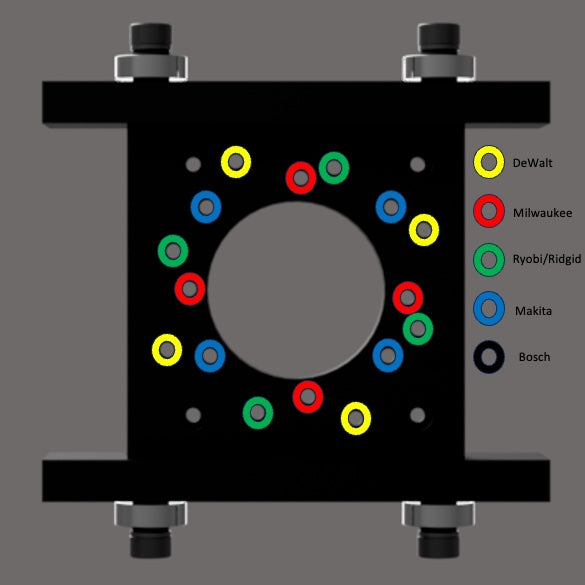
Compatible with multiple routers: Color coded holes to easily identify the hole pattern for your router.
- Compatible routers:
- Designed for a continuous radius: will not work for a compound radius
- Standard Jig Design: will work with fretboards up to 3" wide
- Extended Range Jig Design: will work with fretboards up to 5″ wide
- Material: PLA
Inside the package:
- Fretboard Radius Router Jig body
- Router base
- Your chosen radius inserts.
- 4 M4 x 10mm long screw to mount the router to the base
Add Truss Rod Routing to Your Fretboard Radius Jig
We've expanded the capabilities of our Fretboard Radius Jig! The router base now includes a threaded insert, allowing you to attach our new Truss Rod Inserts directly to the center of the base for precise, stable routing.
For best results, we recommend using the Amana 46202-K router bit. If additional reach is needed, a high-quality router extension adapter can be used—but beware of cheaper extensions, as they can introduce runout and affect accuracy.
Instructions:
We recommend a long straight bit with a 3/8″ cutting diameter such as the Whiteside 1023.
1. Setting the Height:
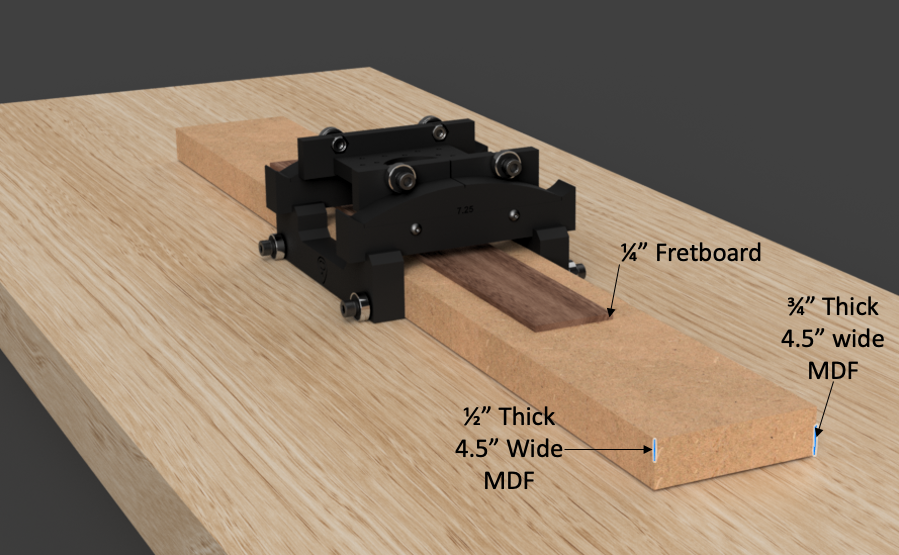
Choose the thickness of your preferred board material (MDF, plywood, or hardwood) such that, when placed on your working surface, there’s a 1.5-inch height from the top of the surface to the top of the fretboard.
Importance of 1.5-inch Height: The radius inserts are designed to compensate for the distance from where the router base contacts the radius insert to the top of the fretboard. This height ensures an accurate radius replication. If the setup has a height less than 1.5 inches, there’s a risk that the resulting radius on the fretboard may be rounder than intended.
2. Board Preparation:
Cut the chosen board material to a width of 4.5 inches (6.5" for extended range version). Ensure the edges are straight and the board is free from defects.
Securing the Materials:
3. Use double-sided tape to affix the board to your workbench securely.
4. Positioning the Fretboard:
Center the fretboard onto the affixed board, ensuring even spacing on all sides. Once positioned correctly, use double-sided tape to secure the fretboard in place.
Note: Carefully inspect the fretboard to verify there are no raised sections or uneven areas that might interfere with the routing process.
5. Attaching the Jig:
Attach the jig to the router base using the provided screws, ensuring a firm and secure fit.
6. Installing Radius Inserts:
Slide the desired radius inserts into the slot located in the jig’s body. Once properly positioned, tighten the set screws to secure the inserts in place.
7. Placing the Jig Body:
Position the Fretboard Radius Router Jig body onto the setup constructed in steps 1-4.
8. Positioning the Router:
Place the router base onto the jig body, ensuring it aligns correctly and sits stably. Make sure all four bearings on the router base are making contact with the radius insert for accurate routing.
9. Centering the Router:
Align the router using the center lines provided on both the router base and the radius insert.
10. Adjusting the Router Bit:
Carefully lower the router bit until it barely touches the fretboard. We advise against using a spiral bit for this process. Opt for a straight bit for the best results.
11. Starting the Routing Process:
Slide the jig in a manner that the router bit is clear of any wood. With the bit in a clear position, safely turn the router on, readying it for the routing process.
12. Routing the Fretboard:
Begin routing the fretboard. Ensure the router base bearings maintain contact with the radius insert at all times. Move with the grain of the wood. After completing each pass, slide the router base laterally to start a new path, ensuring full coverage of the fretboard surface.

Collapsible content
Key Features
- Interchangeable Radius: The jig comes with the option to select two radii (2 sets of two inserts)
- Variety of radius options: 7.25, 9.5, 10, 11, 12, 13, 14, 15, 16, 17, 18, 19, 20, 25, 26, 30
- Metric Radii Available: We also offer popular metric radii such as 400mm and 430mm
- Custom Radius Options Available: Contact us if you'd like a custom radius at no additional charge. Note: Any radius below 7.25" will likely not work with this design.
- Compatible with multiple routers: Color coded holes to easily identify the hole pattern for your router.
Compatible routers:
M18 Fuel
Ryobi P601 One+
Dewalt DWP611
Bosch PR20EVS
Makita RT0701C
Ridgid R2401 - Designed for a continuous radius: will not work for a compound radius
- Standard Jig Design: will work with fretboards up to 3" wide
- Extended Range Jig Design: will work with fretboards up to 5″ wide
- Material: PLA
Inside the package:
- Fretboard Radius Router Jig body
- Router base
- Your chosen radius inserts.
- 4 M4 x 10mm long screw to mount the router to the base
Truss Rod Routing
We've expanded the capabilities of our Fretboard Radius Jig! The router base now includes a threaded insert, allowing you to attach our new Truss Rod Inserts directly to the center of the base for precise, stable routing.
For best results, we recommend using the Amana 46202-K router bit. If additional reach is needed, a high-quality router extension adapter can be used—but beware of cheaper extensions, as they can introduce runout and affect accuracy.
How to Use
We recommend a long straight bit with a 3/8″ cutting diameter such as the Whiteside 1023.
1. Setting the Height:
Choose the thickness of your preferred board material (MDF, plywood, or hardwood) such that, when placed on your working surface, there’s a 1.5-inch height from the top of the surface to the top of the fretboard.
Importance of 1.5-inch Height: The radius inserts are designed to compensate for the distance from where the router base contacts the radius insert to the top of the fretboard. This height ensures an accurate radius replication. If the setup has a height less than 1.5 inches, there’s a risk that the resulting radius on the fretboard may be rounder than intended.
2. Board Preparation:
Cut the chosen board material to a width of 4.5 inches (6.5" for extended range version). Ensure the edges are straight and the board is free from defects.
Securing the Materials:
3. Use double-sided tape to affix the board to your workbench securely.
4. Positioning the Fretboard:
Center the fretboard onto the affixed board, ensuring even spacing on all sides. Once positioned correctly, use double-sided tape to secure the fretboard in place.
Note: Carefully inspect the fretboard to verify there are no raised sections or uneven areas that might interfere with the routing process.
5. Attaching the Jig:
Attach the jig to the router base using the provided screws, ensuring a firm and secure fit.
6. Installing Radius Inserts:
Slide the desired radius inserts into the slot located in the jig’s body. Once properly positioned, tighten the set screws to secure the inserts in place.
7. Placing the Jig Body:
Position the Fretboard Radius Router Jig body onto the setup constructed in steps 1-4.
8. Positioning the Router:
Place the router base onto the jig body, ensuring it aligns correctly and sits stably. Make sure all four bearings on the router base are making contact with the radius insert for accurate routing.
9. Centering the Router:
Align the router using the center lines provided on both the router base and the radius insert.
10. Adjusting the Router Bit:
Carefully lower the router bit until it barely touches the fretboard. We advise against using a spiral bit for this process. Opt for a straight bit for the best results.
11. Starting the Routing Process:
Slide the jig in a manner that the router bit is clear of any wood. With the bit in a clear position, safely turn the router on, readying it for the routing process.
12. Routing the Fretboard:
Begin routing the fretboard. Ensure the router base bearings maintain contact with the radius insert at all times. Move with the grain of the wood. After completing each pass, slide the router base laterally to start a new path, ensuring full coverage of the fretboard surface.
Let customers speak for us
from 124 reviewsThis radius jig is amazing, it had my fretboard accurately radiuses in no time flat. I also bought the matching radius sanding form and it made short work of finish sanding the fretboard. I couldn’t be happier with my purchase!
I’ve used this tool numerous times with great results. It’s paid for itself many times over.
Perfect fit, quick shipping, would recommend
High quality, accurate luthiery tools. I will definitely order more.
Easy to navigate store. Products are exactly as advertised. Thanks
Excellent tool at a great price point. Extremely accurate and easy to use and setup. Thanks!!
I'm a big fan of things that work. This absolutely works brilliantly! Bang for the buck you can't beat it. This also applies to the Nut and Saddle sander. I bought that on a whim a year or so ago and it saves me hours of time and allows for micro adjustments to my setups. Great job once again!
Very well made. I replaced another tool I was using and upgraded to this. A++
Great designa and product works great!
Great poroduct prompltly shipped and well packaged. Incredible value!
Good stuff! Really nicely made and slick to use!
Works as you would expect, just like everything from String Pluckery.
Excellent product. Saves me hours of sanding and radius come out perfect.